Shareholder
Attorney at Law
Bridging Law, Technology & Public Service
Bridging Law, Technology & Public Service
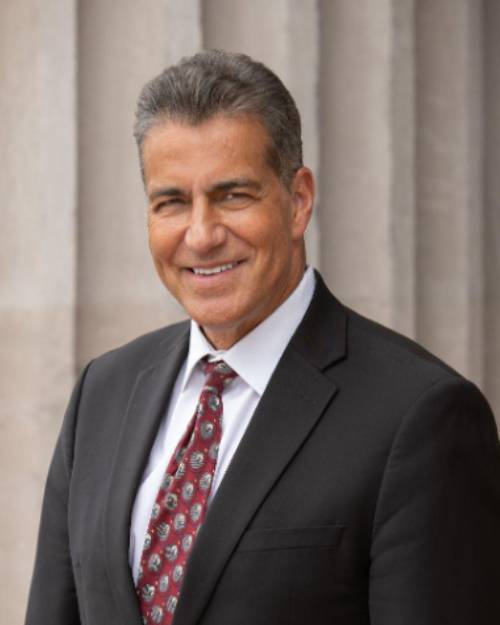
Fred Galves is an esteemed legal professional with a distinguished career spanning several decades. After graduating from Harvard Law School in 1986, he was a Judicial Law Clerk for the Hon. John L. Kane, Jr., Federal District Court Judge (Colorado). He then worked at a prominent litigation law firm in Denver, Colorado, Holland & Hart, before embarking on a fulfilling career as a Law Professor. Starting in 1993, he graced the halls of Pacific McGeorge as a tenured law professor for over twenty-two years, imparting his extensive knowledge and expertise to generations of law students, as well as being a prolific legal scholar authoring law school textbooks and many law review articles. Galves also has been a visiting law professor at Sturm College of Law, Denver University, UC Davis Law School, and Fordham Law School in New York City. After retiring from McGeorge in 2015, Fred’s commitment to public service and community engagement took center stage, where he collaborated with several community colleges, law schools, and other various organizations. In 2021, Fred began working at Colorado State University Pueblo as the “Special Assistant to the President for Community Engagement.” Today, he proudly serves as a partner at Orona, Garcia & Galves Law Firm, located in his beautiful hometown of Pueblo, CO.
At Orona Garcia & Galves, Mr. Galves specializes in all aspects of commercial and complex litigation, contractual and business law disputes, and he serves as corporate counsel to both private companies and public entities. Fred also provides Alternative Dispute Resolution “ADR”/Mediation Services to help litigants resolve their lawsuits efficiently and inexpensively outside of court. Mr. Galves is currently expanding his law firm’s legal practice to include Family Law, Criminal Law, and Immigration Law. Fred also has vast experience in “Restorative Justice” Programs with District Attorney Offices designed to address nonviolent, low-level crimes through community-based solutions by redressing the harm caused by these offenses outside of the traditional criminal justice system (e.g., without using trials and jail/punishment). The goal of Restorative Justice is to repair and restore the offender’s relationships with both the community and with the victim and to reduce crime and recidivism.